Private Equity Edition ·
AI As PE's Value Creation Engine
Every major technology shift creates two kinds of winners: those who deploy it, and those who understand what it consumes.
Every major technology shift creates two kinds of winners: those who deploy it, and those who understand what it consumes.
Hi, I’m Lily. I created this PE edition of the AI Dispatch for our growing community of thousands of private equity leaders and portfolio company operators navigating AI implementation.
This week’s theme: Inside THL Partners' AI Playbook
Every major technology shift creates two kinds of winners: those who deploy it, and those who understand what it consumes. Thomas H. Lee Partners positioned for both. The firm built a systematic playbook: quarterly roundtables to share learnings, a Strategic Resources Group embedding AI into multi-year operating plans, and portfolio companies like Hexure and Bynder generating measurable revenue streams from AI product features.
But AI doesn't just create value where you deploy it. It inflates valuations in markets you'd never connect to machine learning, like gas-fired power plants commanding premium exits because data centers need electricity to train models. This week, we're examining one firm that scored by executing methodically on direct AI implementation, while other PE firms captured windfalls simply by holding energy infrastructure as AI's second-order demands reshaped entire markets.
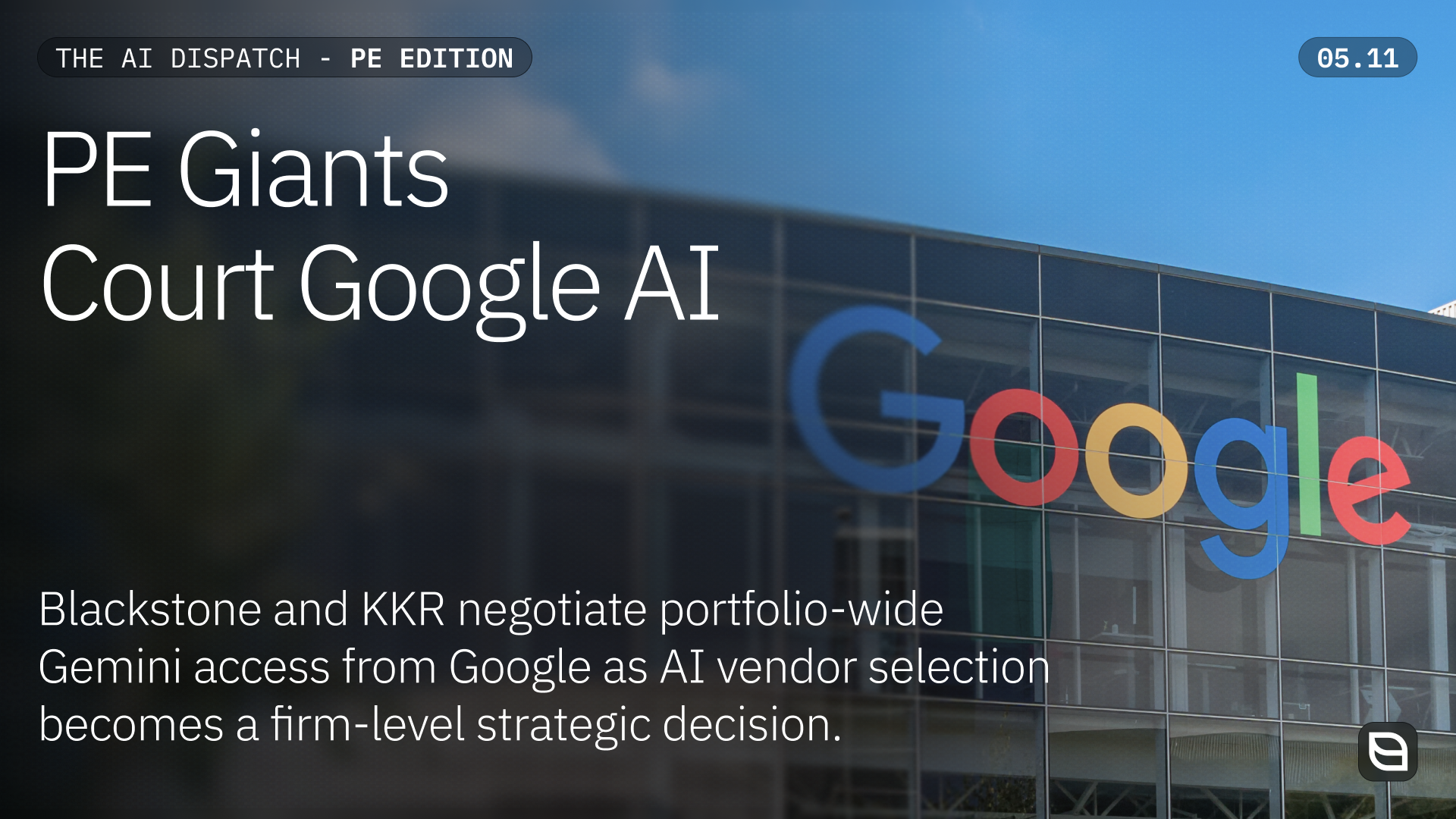
AI's insatiable power demands are inflating energy portfolio valuations as data centers race to secure electricity for model training. Energy Capital Partners' portfolio company Calpine sold to Constellation Energy for $26.6 billion, the firm's most profitable exit ever, driven entirely by surging AI infrastructure needs. Data centers will require nearly 100 gigawatts of new power by 2030, turning once-stranded gas generation assets into premium acquisitions. PE firms that held energy infrastructure through policy headwinds now capture windfall exits, proving AI creates value beyond direct operational deployments: through second-order infrastructure demand. Read more →
THL's Jim Carlisle reveals AI creates value across three levers: revenue growth, operational efficiency, and cost discipline through automation. Portfolio company Bynder embedded AI capabilities into its digital asset management platform, generating incremental AI-derived revenue streams, while AMI uses AI to accelerate firmware code development in servers and devices. THL's Strategic Resources Group integrates AI into multi-year product and operating plans rather than isolated experiments, with best practices shared portfolio-wide. The firm's second Automation Fund now targets only profitable companies, abandoning minority positions and cash-burn profiles. "The conversation has shifted from experimentation to execution." Read more →
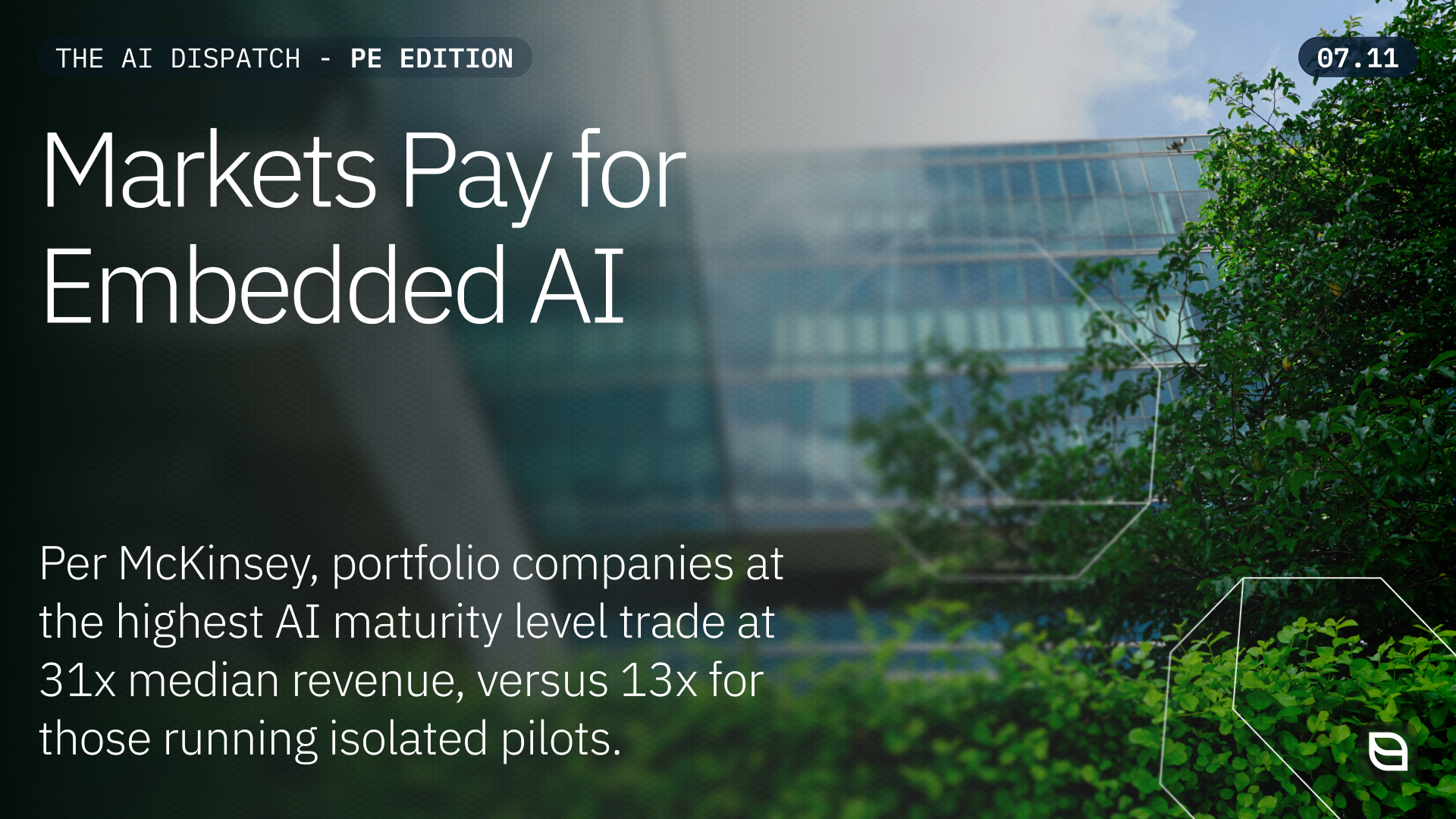
PE firms are accelerating AI integration across portfolio companies as the exit window reopens, with 58% prioritizing revenue growth to boost valuations ahead of anticipated 2026 liquidity. Fund managers holding 63% of portcos beyond five years are deploying fast-track value creation initiatives: AI reduces operational costs, improves decision-making, and enables workforce reallocation from rote tasks to strategic priorities, signaling operational readiness to buyers. With 84% experiencing longer holds than 2024 and exit competition intensifying, GPs treating this period as an "active value-creation sprint" rather than passive waiting will command premium pricing when buyers have choices. Read more →
Every week, we’ll bring you a new, real-world example of how targeted AI deployments within portfolios are solving persistent business challenges.
Company: Hexure (Thomas H. Lee Partners portco), the leader in digital sales solutions for the insurance and financial services industry.
Problem: Insurance carriers faced a persistent operational crisis: paper-based application processes generated error rates as high as 70%, forcing advisors to resubmit applications repeatedly. Manual data entry created 5-7-day processing delays, while advisors waited weeks for commissions and clients endured extended policy issuance timelines. Staff manually typed applications, QA’d cases, and processed checks by hand, a workflow that throttled growth and frustrated distribution partners.
Solution: Hexure launched AI-enabled enhancements to its unified platform in November 2025, including an AI Health Analyzer that delivers real-time risk classification using carrier-specific guidelines, a Universal Quoter providing side-by-side product comparisons across term and annuity products, and the FireLight e-Application platform that digitizes the entire workflow from quote to submission. Internally, Hexure accelerated product development by deploying GitHub Copilot across 79 of 87 developers.
Results (customer impact + internally):
50% NIGO reduction - dropping error rates from 70% to ~35%
Same-day policy issuance for cash applications (previously 5-7 days)
90%+ e-signature adoption rate
112 new distribution partners efficiently launched
Platform traction: 37% of Hexure transactions now life insurance business
Internally: achieved 40%+ efficiency gains in code development, unit testing, and refactoring by deploying GitHub Copilot
THL’s dual investment in Hexure’s product AI (customer-facing) and internal developer productivity (GitHub Copilot) demonstrates how PE firms accelerate portfolio company growth by funding both external innovation and internal capability-building. Hexure rebuilt insurance sales infrastructure for the digital era, proving AI can eliminate operational friction while driving measurable advisor satisfaction.
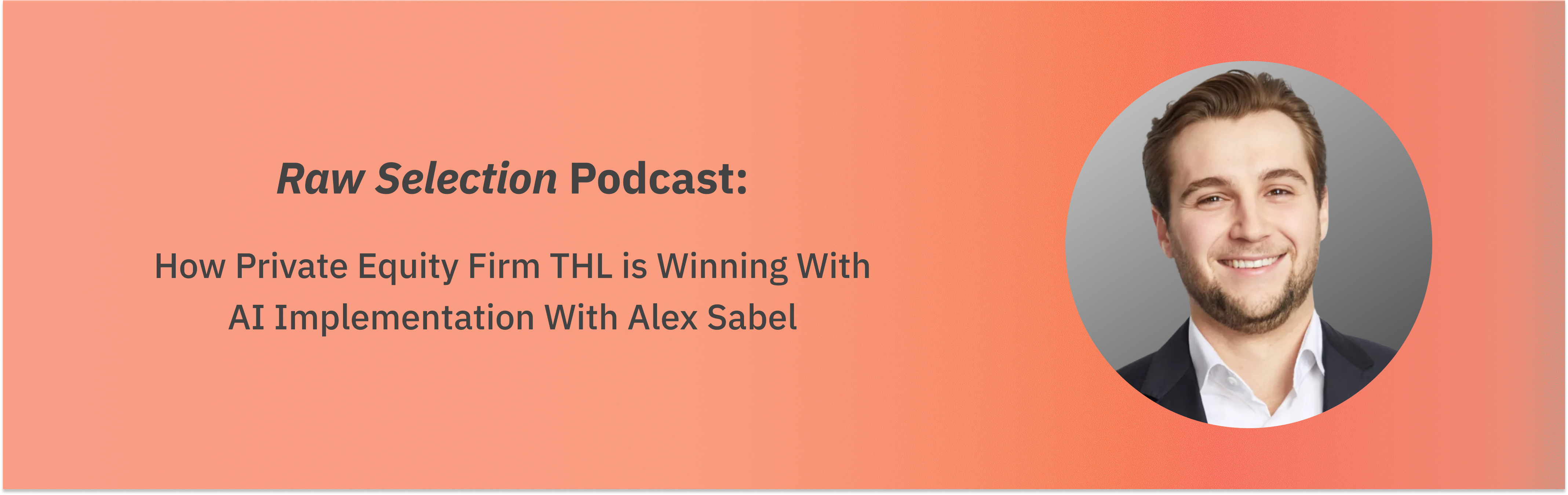
In this episode of Raw Selection, Alex Sabel, Vice President at THL Partners, breaks down the firm's three-pronged AI strategy: investing in AI infrastructure companies, deploying AI internally for investment workflows, and supporting portfolio company adoption through quarterly roundtables and vendor ecosystems. Sabel shares case studies where AI is driving product innovation and operational efficiency, while emphasizing the importance of data foundations and knowing when to "fail fast" on AI experiments that don't deliver ROI. Listen here →
THL’s results aren’t remarkable because they deployed AI: lots of firms are doing that. They’re remarkable because they built a system for deployment. Quarterly roundtables where portfolio CTOs share failures with the same detail as wins. A Strategic Resources Group that translates AI opportunities into multi-year operating plans, not quarterly experiments. An Automation Fund that abandoned minority positions and cash-burn profiles to target only profitable AI-driven businesses.
What’s important to grasp from this week’s issue is that AI creates value in two dimensions. First, where you implement it directly, like Hexure cutting errors 50%, Bynder generating new revenue streams, AMI accelerating development cycles. Second, where you understand its dependencies: power generation, compute infrastructure, cooling systems, fiber networks.
Both strategies work, but isolated experiments don't. Never.