AI Dispatch ·
Trust AI Like Your Customers Do
There is a shift happening this holiday season: customers value their experience more and more rather than brand recognition.
There is a shift happening this holiday season: customers value their experience more and more rather than brand recognition.
Hi, I’m Lily. I live in the world of distribution, where there is a shift happening this holiday season: customers value their experience more and more rather than brand recognition. Nearly six in ten Gen Z and millennials now say they’d fully trust an AI agent to compare prices and recommend the best deals. For distributors, this signals that your customers are embracing AI faster than you might expect, and they’ll demand the same speed from you.
This week’s stories show what that looks like in practice: unlocking trapped cash, automating the heaviest warehouse work, and aligning technology with the people who use it.
A new Hackett Group study found U.S. companies are leaving $1.7 trillion in excess working capital on the table. This isn’t new money to earn; it’s capital already moving through the business, trapped by inefficiencies. For distributors, unlocking working capital is a resilience strategy: automate invoicing, surface where cash is stuck, and forecast supplier demand.
MIT-founded Pickle Robot Company builds robots that autonomously unload trucks, handling boxes up to 50 pounds at 400 - 1,500 cases per hour. Customers include UPS, Ryobi, and Yusen Logistics. With warehouse injury rates double the national average, Pickle sees unloading as chapter one, with plans to orchestrate robots across the full supply chain. For distributors struggling with labor churn and safety costs, automating the most punishing tasks could stabilize operations and free workers for higher-value problem-solving.
U.S. companies are sitting on $1.7 trillion in trapped working capital, and distributors are no exception. The culprits: slow receivables, bloated inventory, and mismanaged payables. AI-powered invoicing, anomaly detection, and demand forecasting can accelerate cash conversion and free up liquidity. Top performers are already widening the gap, with an 18-day DSO advantage over median peers. For distributors facing margin pressure, unlocking idle cash may be the safest growth lever heading into 2026.
Mango is using an AI-powered Lab Test Management tool to centralize and digitize quality testing across its supplier network. Previously limited to receiving completed reports, Mango now has end-to-end visibility. After six years, Mango manages 100% of its inspection programs on the platform and plans to expand into supplier onboarding and strategic sourcing. For distributors managing supplier networks, centralized compliance visibility can reduce defects and streamline quality workflows.
Digital platforms, AI, and automation are reshaping motor freight, but technology alone isn’t enough. Gartner’s 2025 survey shows high performers gain efficiency and sharper decision-making, while others struggle to realize ROI from the same tools. The gap is organizational alignment. For distributors and supply chain operators, emerging capabilities include dynamic spot/contract balancing, fraud prevention, and predictive routing.
Tutor Intelligence raised $34M to scale AI-powered warehouse robots that learn from human-annotated production data. The MIT spinout offers a robot-as-a-service model with 30-day delivery and next-day operation, no massive upfront cost. CEO Josh Gruenstein notes 90% of U.S. factories still lack robots, largely because traditional automation is too expensive and rigid for smaller operations. For distributors weighing automation, Tutor’s legacy could lower the barrier to entry significantly.
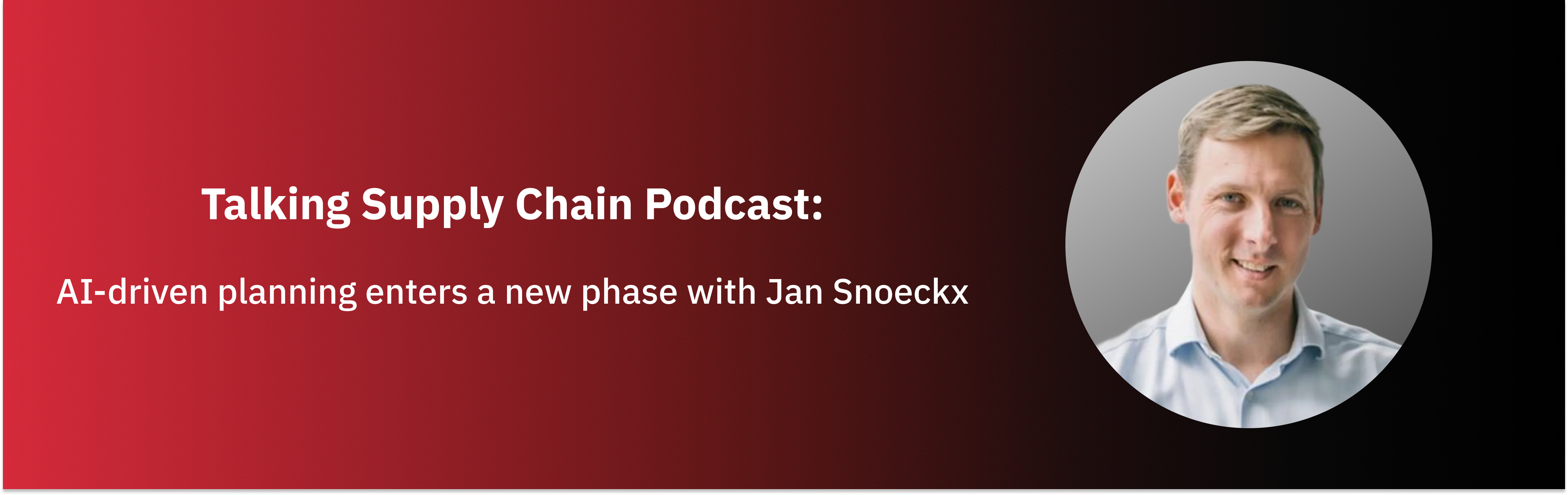
In this episode of the Talking Supply Chain, Gartner’s Director Analyst Jan Snoeckx explains why agentic AI is moving to measurable value in supply chain planning. Touchless forecasting now generates demand plans automatically, freeing planners from manual tuning. For supply chain operators, this signals a fundamental role change ahead.
Consumers are trusting AI agents to shop for them. Planners are shifting from correcting outputs to shaping AI goals. Robots are learning from human tutors. The theme across this week’s stories is not mere adoption anymore; it’s confidence. And distributors who hesitate are dramatically falling behind the expectations of their own customers and workforce.
Call it a distributor’s mandate, if you will: automate what drains your people, surface what’s stuck, and trust the systems you build. Your customers already do.